Spinal Stenosis
Spinal Stenosis: Definition
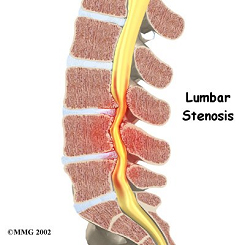
Spinal stenosis is the narrowing of the nerve cavaties/lumens, which results in pressure on the spinal cord, the cauda equina or nerve roots. The nerve cavaties involved are the spinal canal and the invertebral foramen. The pain for patients with spinal stenosis is severe.
Spinal Stenosis: Most Often TreatedMen and women over 50 years of age are the most often treated for spinal stenosis. Therefore spinal stenosis is usually considered an age related conditions. However, the spine-injured or those born with narrow canal syndrome may seek treatment at a younger age. |
 |
Spinal Stenosis: Causes
Degenerative Conditions
- Facet Hypertrophy
- Ligamentum Flavum Ossification
- Posterior Longitudinal Ligament Ossification
- Osteophytes (Bone Spurs)
Disc Problems
- Bulging Disc
- Protruding Disc
- Prolapsed Disc
Positional Causes
- Spondylolisthesis
- Trauma
Bone Diseases
- Osteoarthritis
- Rheumatoid Arthritis
- Paget's disease
- Fluorosis
Other Conditions
- Tumors
Spinal Stenosis: Symptoms
Radiating pain down the arms or legs (Sciatica), numbness, weakness, cramping, or general pain in the limbs are indication of spinal stenosis in the intervertebral foramen. If flexing the lower back relieves symptoms, this is another indication that spinal stenosis may be at work. Bilateral leg symptoms, that increase with walking distance, and decrease when sitting down, are a strong hint for central lumbar stenosis. This condition is called claudication.
Severe stenosis in the caudal equina may cause bowel and bladder incontinence, and requires immediate medical attention. Severe stenosis in the cervical spine or the thoraco-lumbar region can lead to spinal cord myelopathy, a very serious condition.
Spinal Stenosis: Diagnosis
The doctor may use a variety of approaches to diagnose spinal stenosis and rule out other conditions.
- Medical History
- Physical examination
- X-Ray
- MRI
- Computerized Axial Tomography (CAT) or CT Scan
- Myelogram
- EMG/NCS
Spinal Stenosis: Conservative Treatments
These conservative treatments may not suffice in long-term:
- Over-the-counter analgesic anti-inflammatory drugs
- Corticosteroid injections
- Anesthetic injections, known as nerve blocks and epidurals
- Restricted activity (varies depending on extent of nerve involvement)
- Physical therapy
- A lumbar brace
- Chiropractic treatment
- Acupuncture
Spinal Stenosis: Surgical Options
Microsurgical decompression by:
- Flavectomy
- Foraminotomy
- Laminotomy
- Laminoplasty
- Nucleotomy in primary discogenic stenosis
- Artificial Disc Replacement in primary discogenic stenosis
Dynamic Dorsal Spine Stabilization by:
- Interspinous devices
- Non-fusion pedicle screw systems
Spinal Stenosis: Surgery Risks
All surgery carries risks from anesthesia, blood clots and infections. If complications from these risks arise, they most often can be successfully treated. The physical condition of the patient (such as obesity and diabites) can also add risk to surgery.
In elderly patients, as frequent in spinal stenosis, these general risks can best be addressed by seeking a very minimally invasive approach and instrumentation. Such as combining microsurgical decompression with an interspinous device.
Spinal Stenosis: Surgery Long-Term Outlook
The right surgical properly executed will provide long term relief for the spinal stenosis treated. Of course, if the condition was allowed to continue too long, there may be remaining pain or numbness due to nerve damage already present. So one should not wait too long.
Treating spinal stenosis will not turn back the wheel of time and remove spinal degeneration. It`s about freeing nerves. If indicated, surgery for spinal stenosis can be combined with other techniques to address degenerative local pain.
Spinal Stenosis